On Friday, traffic backed up beyond the entrance of the Cheung Tsing tunnel when Tsing Ma bridge workers took dramatic protest action at the start of the morning rush hour.
With a tow truck, three cars and road cones, just 10 angry workers were able to stage an illegal and potentially dangerous blockade that shut down the tunnel for 18 costly minutes. There were no arrests and police have indicated charges are unlikely to follow. Secretary for Environment, Transport and Works Sarah Liao Sau-tung acknowledged the angry workers’ right to protest but asked only that they “bear in mind the public interest so that they do not disrupt traffic”.
Last week this newspaper highlighted a flagrant breach of a protest permit by 4,500 New Territories villagers in a recent march on the Central Government Offices (CGO).
Armed with a permit for just 500 marchers, the group – protesting electoral changes set to weaken their exclusive voting rights – packed the sensitive fenced-off area outside the offices. Witnesses reported jostling and taunts directed at police. Traffic was also blocked.
No prosecution or warning action will be taken other than an “advisory” letter asking them to stick to agreed march conditions during future demonstrations.
Some may argue the above highlights that key personal freedoms remain intact in Hong Kong, with the authorities displaying a highly liberal attitude to say the least towards protest enforcement.
Unfortunately matters are not that simple. Weeks before the New Territories march, a group of just 30 pro-democracy demonstrators were denied a permit to march on the CGO to protest Article 23.
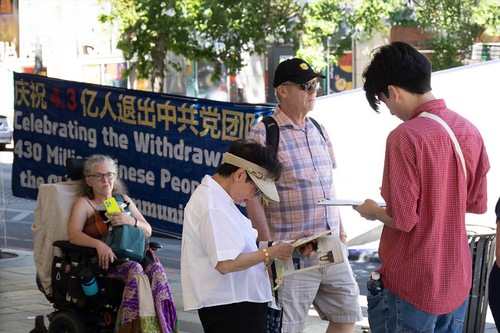
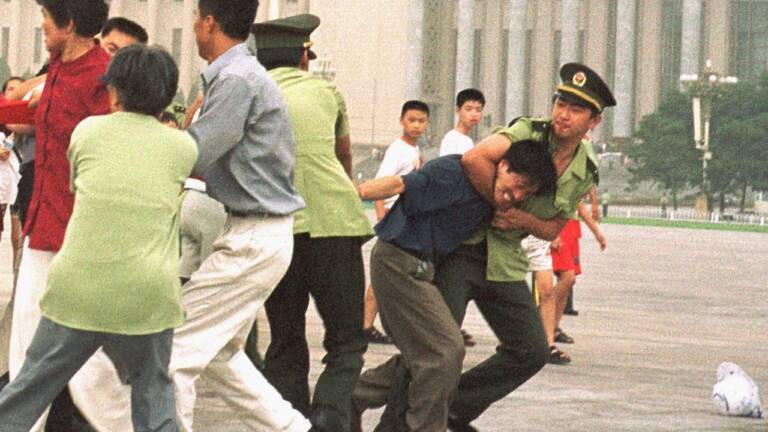
Then there was the controversial prosecution of 16 Falun Gong protesters earlier this year for offences arising out of a peaceful demonstration outside the Beijing Liaison Office.
Enforcing public order is often a thankless task for the police, often requiring delicate snap decisions to protect the public. A host of factors must be weighed at the scene – and later when prosecutions are being considered.
Consistency, however, must be one of them. The growing question marks over recent selective enforcement come at a crucial time for the SAR.
Proposed Article 23 legislation stands to give police even more power – possibly over sensitive demonstrations.
If they cannot adequately and fairly use the laws on the books now, it makes it harder to justify expanding their powers further.
Posting date: 18/Oct/2002
Original article date: 13/Oct/2002
Category: Media Report