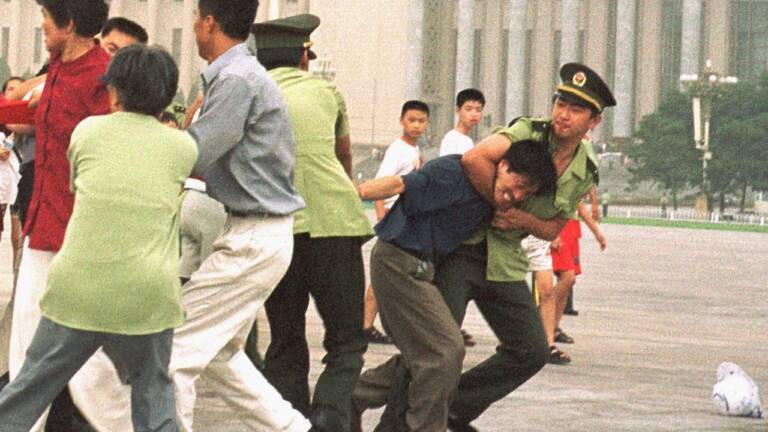
- Where: Melbourne, in front of the Victorian Parliament
House - When: 5:00pm , Monday, 23 December 2002.
December 24 marks the end of a public appeal for the right to freedom of thought,
conscience and religion, expression, association, and the right to peaceful
assembly, currently being challenged in Hong Kong. Article 23, is a proposal
for a controversial legislation to severely punish anything Beijing considers
seditious, subversive or a threat to Mainland security.
However, the definition of precisely what activity would fit into these categories
is disturbingly vague. Consequently, a diverse range of interest groups from
financiers to Falun Gong, from the HK Bar Association to trade unionists, from
democrats to journalists, are all alarmed that Article 23 could seriously undermine
the basic civil liberties that HK has traditionally enjoyed.
New Zealand Justice Minister Phil Goff has also voiced concern about the possibility
of HK permanent residents, who are also foreign nationals, being charged with
sedition for comments made whilst in another country.
Who is at risk?
JOURNALISTS
The Committee to Protect Journalists (CPJ) has said Article 23 would present
a “grave threat to freedom of expression in Hong Kong (and) if enacted,
this legislation will send a clear message to Hong Kong journalists that coverage
of sensitive issues, especially Chinese politics, will no longer be encouraged
or even tolerated.”
LAWYERS
On December 9, the Hong Kong Bar Association said the proposals were “based
upon feudal notions of treason” that are not clear or precise enough to
protect fundamental rights and freedoms. The proposal for outlawing secession
“fails to recognise the possibility of a secessionist cause being a legitimate
political demand in the form of an exercise by a people of the right to self-determination”.
BUSINESSES
Banker David Li, who represents the banking industry in the Legislative Council
(and who is a director of Dow Jones), told the American Chamber of Commerce
in early December that executives from more than 10 foreign banks hoped the
Hong Kong government would spell out the exact wording of the proposals. He
said banks were worried about their potential to stifle the free flow of information
here.
Freedom of Belief
Hong Kong guarantees freedom of religion and the Falun Gong spiritual movement
can operate despite being banned on the mainland. But suppose China banned a
religion on national security grounds. In the clash of freedom over national
security, probably few would bet on freedom winning the day in Hong Kong.
Indeed, it has been suggested that the whole raison d’etre for suddenly rushing
through this legislation, is precisely to give the Chinese President a new weapon
in his irrational war against Falun Gong. The recently appointed Catholic Bishop
for Hong Kong, Joseph Zen, has said the regulations currently being drawn up
threaten Falun Gong’s freedom to practice in the territory.
Religion
But Bishop Zen is also concerned about the future of the Catholic Church. The
Vatican has relations with Taiwan, not Beijing. It also has links with an estimated
10 million members of the underground Catholic Church inside China. That might
be grounds enough for it to be banned too. “If tomorrow they say the underground
church in China is dangerous for the State and then they say you are the same
Catholic Church, and then we are in trouble,” said Bishop Zen.
An attack on freedom anywhere in the world undermines that freedom everywhere
else. If enough voices are raised in opposition to Article 23 it can be stopped.
Posting date: 23/Dec/2002
Original article date: 23/Dec/2002
Category: Events