By Shizhong Chen
The
African slave trade, Hitler's concentration camps, and the Soviet gulags,
all added together, are not enough to describe the sinister nature of the Chinese
communist regime's laogai system – the system of “education and rectification
through forced labor.”
This evil system is by far the most-employed
apparatus in the PRC government's persecution of Falun Gong.
What
Falun Gong practitioners have further revealed is the absolute cruelty in the
Chinese laogai system that had previously evaded academic description.
Hundreds of thousands of Falun Gong practitioners have been incarcerated in labor
camps and detention centers since the start of the Chinese government's persecution
of Falun Gong. At great risk to their lives, these practitioners continue to send
firsthand information on the torture, killing, and slave exploitation of prisoners
throughout China. Their tear and blood-stained reports add “texture” and “content”
to what we know about the Chinese laogai system, a most cruel system against
humanity.
The laogai system is a machine of genocide.
The majority of the thousands of deaths of Falun Gong practitioners have occurred
in labor camps.
The laogai system is a machine of torture.
The guards of the Masanjia Labor Camp, for example, openly shout at Falun Gong
practitioners: “This is a living hell!” With the instruction from the central
government that, “No measure is too excessive against Falun Gong,” the types of
tortures used in the labor camps and detention centers are limited only by the
imaginations of demonic minds, and the amount of pain inflicted is limited only
by the death of the victim.
The laogai system is a machine
of corporate fascism. With no concern about the source and availability of slaves,
prisoners are driven to the limit, treated as objects from which the maximum amount
of labor is extracted, unloaded when dead, or half-dead, and replaced with fresh
ones. The living conditions in the laogai system are absolutely horrific,
as any improvement in conditions will subtract from profit.
Unfortunately,
the laogai system is in part fueled by western businesses and corporations.
On paper, they cannot legally import products made by forced labor. In practice,
however, there is nothing to compel their Chinese connections to reveal which
goods are made by forced labor. In a few cases when the origins of forced labor
products were exposed, the western corporations involved were interested only
in protecting their own images and did their best to conceal their participation.
In this newsletter, we reveal a few of the products that are
made in the Chinese labor camps by Falun Gong practitioners. The courage of Falun
Gong practitioners has undisputedly revealed the existence of a large-scale modern
slavery system in China. It took the American Civil War to put a moral end to
U.S. slavery, WWII to end Hitler's concentration camps, and the Cold War
to end the Soviet gulags. No one knows what it will cost humanity to eradicate
the laogai system; however, the foreign money flowing into the Chinese
labor camps will only drive the price higher.
Toy Rabbits from a Labor Camp
 |
 |
|
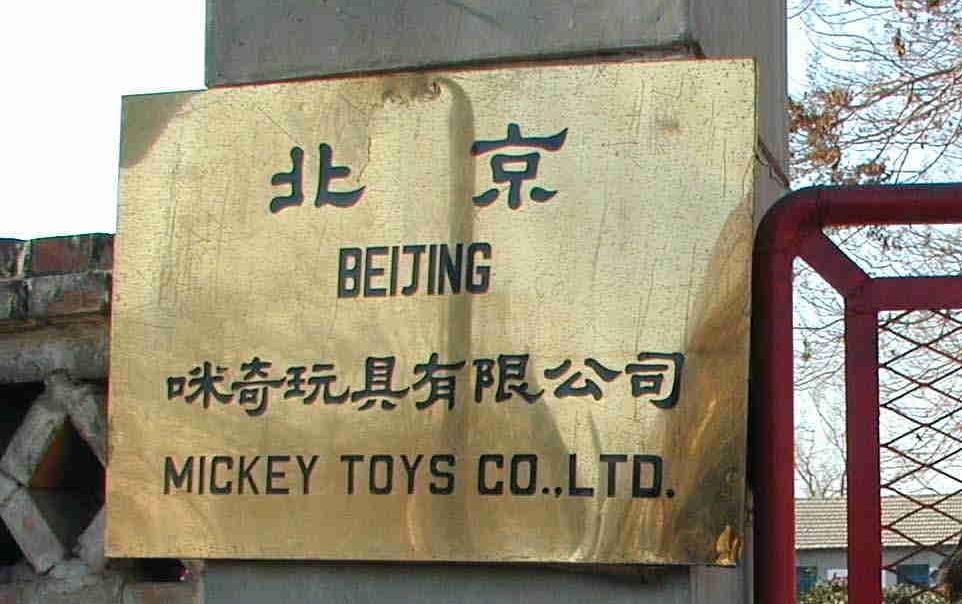
Signboard on the front gate of Beijing |
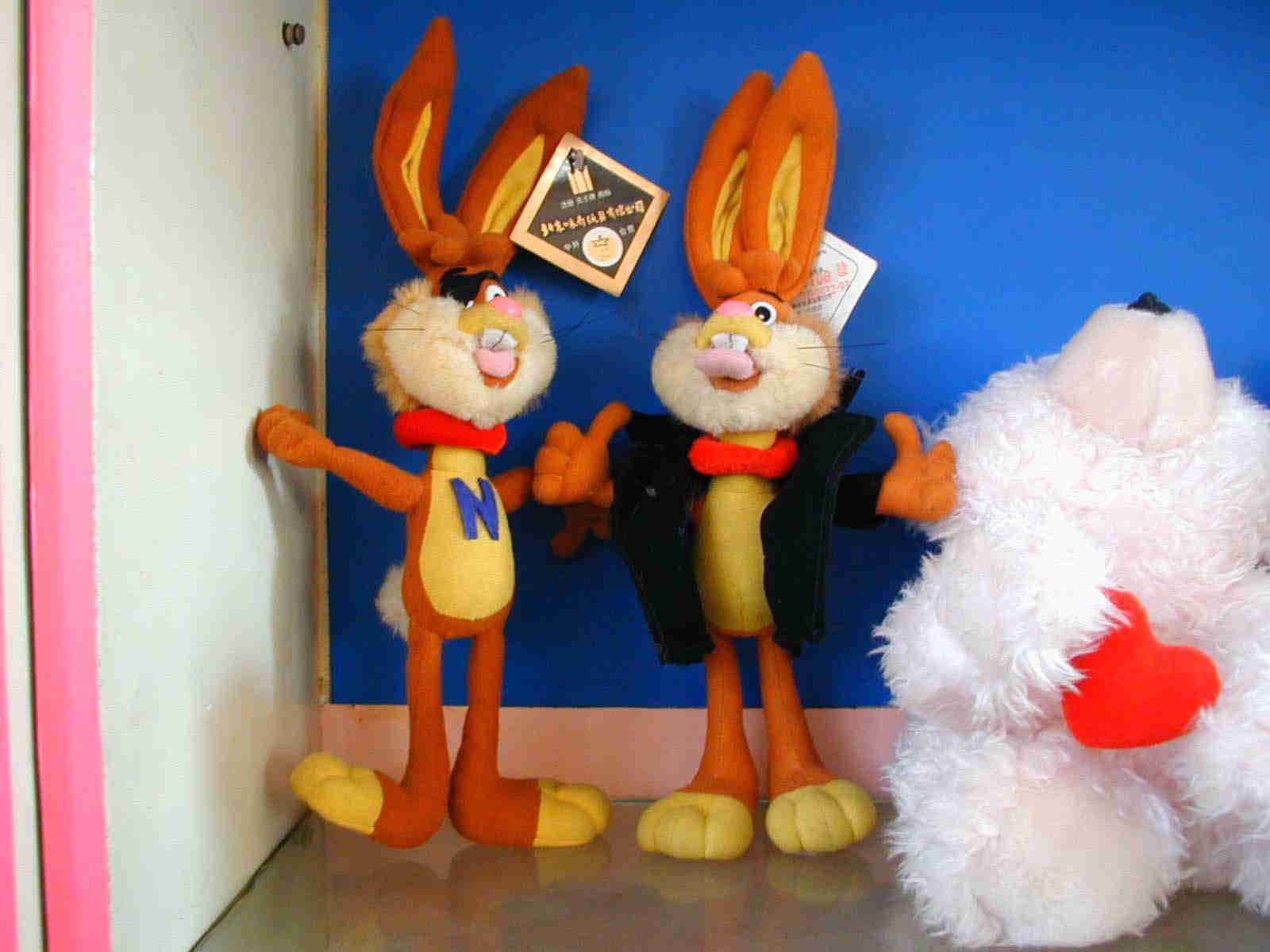
Toy rabbits |
Location:
Xin'an Women's Labor Camp in Beijing
These toy
rabbits are products of the Beijing Mickey Toys Co., Ltd., but were made at Xin'an
Forced Labor Camp in Beijing. In February 2001, nearly 1,000 detained Falun Gong
practitioners were forced to make 100,000 toy rabbits, with no pay, for Beijing
Mickey Toys Co., Ltd., subcontracted by Nestle. These products were exported to
many countries, including the United States, Canada, Australia, Denmark, Brazil,
Hungary, Japan, and Southeast Asia.
Products labeled as “Made
in China” can be seen in every corner of the world. However, how many people know
that many of the gifts they buy for their children and grandchildren are actually
made with slave labor?
Tainting
the Olympic Spirit Location: Changle Labor Camp, Weifang City, Shandong
Province
From March 30 to April 5, 2004, Falun Gong
practitioners detained at Changle Labor Camp were forced to plant trees and dig
ditches along the highway from Jinan to Qingdao as part of infrastructure improvements
underway to prepare for Qingdao's participation in the 2008 Olympics.
Practitioners
who were forced to work included those over 60 years old. Due to long-term malnutrition,
poor living conditions, and heavy labor, many practitioners became very weak.
Police shouted at them to work quickly, telling them that the hard work would
help them “transform”
(i.e., give up their belief). They were all exhausted from being overworked. Many
of them had never done such hard physical labor in their lives.
The
Olympic spirit is to embody courage and nobility, calling the Olympic flame a
“sacred fire” passed on to humans by the gods. The PRC's communist regime
has tainted this spirit by torturing Falun Gong practitioners to do hard labor
for the Olympic Games.
How
Vessels Are Made
 |
 |
|
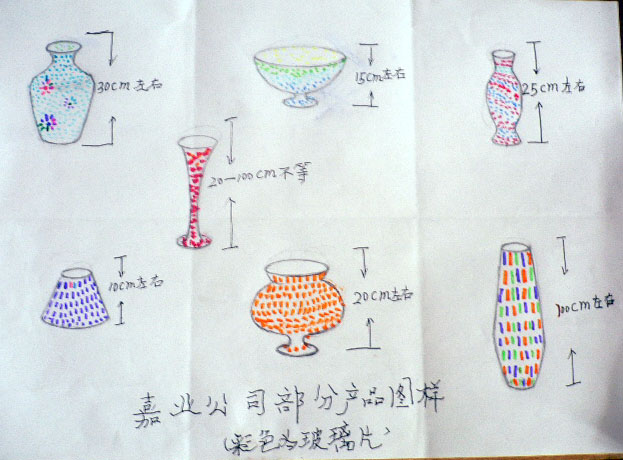
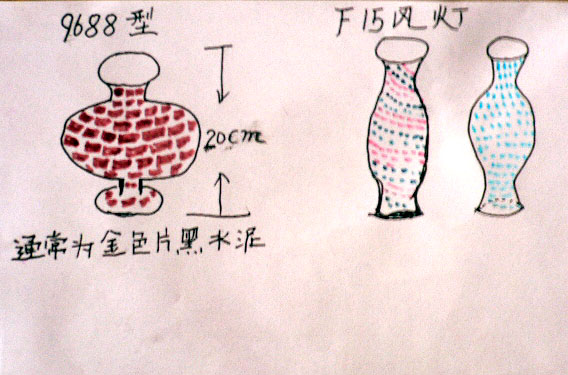
Product sample diagrams |
|
Location: Wangcun Forced Labor Camp, Shandong Province
In July 2002, Falun Gong practitioners detained at Wangcun
Forced Labor Camp in Shandong Province were forced to do slave labor, producing
various glass products for Zibo Jiaye Company. It was said that these products
would be exported to the USA, South Korea, and other countries.
First,
let's introduce the production process involved in this slave labor.
First,
tinted glass is cut into 1-centimeter-square pieces, then glued onto vessels with
1-2 mm between each piece of glass. Next, the vessels are transferred to the grout
workshop, and the gaps are filled with grout, leaving only the upper and bottom
edges (about 2 mm) bare. The grout is mixed and smeared into the gaps. Then, a
layer of dry cement powder is added and wiped with a dry cloth. Sometimes the
grout is white and sometimes it is black. Finally the vessel is cleaned with muriatic
acid, which emits toxic fumes.
During the production process,
the vessel is put on an emplacement (bracket). With one hand holding the glue,
and the other hand holding a piece of glass, one must work continuously to paste
the glass onto the vessel. The glue contains large quantities of benzene and other
harmful chemicals. Some of the glues emit very strong odors that are toxic. Some
people have gotten headaches from it, and had symptoms, such as their eyes turning
red, nausea, etc. Due to long-term labor under high pressure, one's eyesight
deteriorates. After the glue dries, cement will be added. The cement workshop
is filled with dust. There is a large quantity of cement dust in the air. The
cement dust is inhaled into the lungs, however there are no labor safeguard measures
in place to protect the workers.
The manufacturing cost is
no more than one Yuan and the sales price is more than five US dollars. The tag
price is usually about US$4.99 or US$5.99. Some larger and detailed products will
have a tag of US$14.99, etc.
In 2003, the practitioners had
to work from 5:00 a.m. until 1:00 a.m. the next morning. They would begin working
without even washing up or brushing their teeth. They had only 15-20 minutes for
meals. The meals consisted of radish strips pickled in soy sauce and two pieces
of steamed bread. In the wintertime, their hands were frozen to the point of becoming
swollen and bleeding.
The workload kept increasing. If one
could not accomplish the task, he had to work overtime. Many people became mentally
disoriented due to exhaustion. The labor camp would not allow anyone to take a
break even if one felt unwell; even those who were in their sixties would not
be excused. Their fingers have been worn down from the labor. After repeating
one action over and over for a very long time, some people became so weary that
they developed heart trouble. Some practitioners became ill, and thus could not
work. The police decided that this was affecting the company's profits too
much. As a result, most of the practitioners had to go through a new round of
persecution. Some of them were beaten and some were forced to stay awake until
late into the night.
In October 2003, Mr. Zhao Youqiang
from Taian (detained from November 2001 to July 15, 2004) would be awakened at
4 a.m. to work. He had the symptoms of a heart attack because of the hard working
conditions. Although he was in severe pain, they still forced him to work. He
was tortured in this way until his term expired in July 2004. Practitioners had
to pay for anything that was broken during the forced labor.
Mr.
Yang Shaofan said that the kind of glue the workers had to use is harmful.
What he said was reported to policeman Jing Jisheng. In front of everyone, this
policeman ferociously berated Mr. Yang and said, “Jiaye Company has been using
this kind of glue for several years. You are spreading rumors if you say it is
harmful. I will report this to the leaders and extend your term.” He threatened
other practitioners so that they would be afraid to speak out. Each day, they
forced the practitioners to glue 5,000, 6,000, or even 7,000 pieces.
Shanghai's Toys Location: Shanghai Women's
Forced Labor Camp, Shanghai City
 |
|
|
Ms. Li Ying |
Ms.
Li Ying was imprisoned in the Shanghai Women's Forced Labor Camp from
December 2001 to October 2003 because she practices Falun Gong. In late November
2003, she was released from the labor camp and went to Australia with help from
the people in Australia. Below is Ms. Li Ying's forced labor experience.
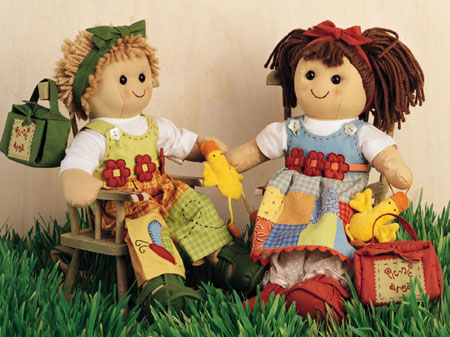
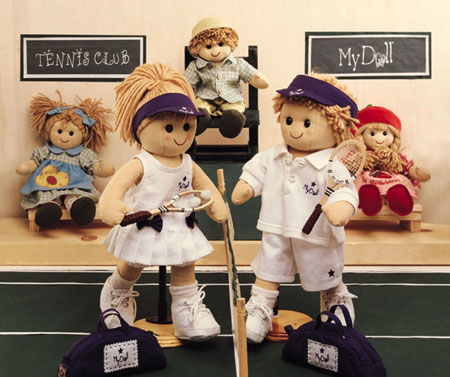
All of these pictures were downloaded from www.mydoll.it.
Dolls exactly like those in the pictures were made, in part, in Division Three
of the Shanghai Women's Forced Labor Camp between June 2002 and May 2003.
Some were packaged and shipped directly to Italy, and others were sent to other
locations for further processing or assembly.
Dolls were laid
out on the ground after they arrived. Some were moldy from the summer humidity.
Detainees would install clothes on them, so the buyers could not see how filthy
the dolls really were underneath.
There were time deadlines
for the products that were about to be exported. Labor camp detainees, including
Falun Gong practitioners, were forced to work from at least 7:00 a.m. to 9:00
p.m. Most people had to work until around 11:00 p.m.
 |
|
|
Picture 1 |
In picture
1, the doll on the left wears overalls. The butterfly pattern on the bottom end
of the right pant leg is completely handmade. First, we put the agglutinated lining
on the backs of three pieces of cloth altogether, and used an electric iron to
iron the cloth onto a yellow base cloth, and then used a pencil to draw the two
antennae of the butterfly, and used three different-colored threads, sewing the
three pieces of cloth to the yellow base cloth according to the following requirements.
The stitch and the distance between two stitches could be no longer than 0.5 centimeters;
the stitches had to be symmetrical and the stitch lengths had to be the same.
The antennae were embroidered with a coffee-colored piece of thread clipped to
a pin. The bottom end of the left pant leg also followed the same requirements.
It had to be in the shape of a curve and could not look rigid. We also embroidered
a line around the collar of the overalls with 0.5 centimeters between stitches.
The doll on the right had its collar embroidered in the same way.
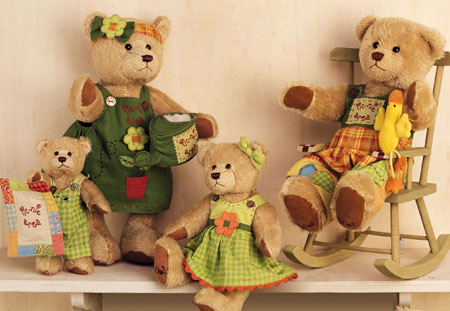
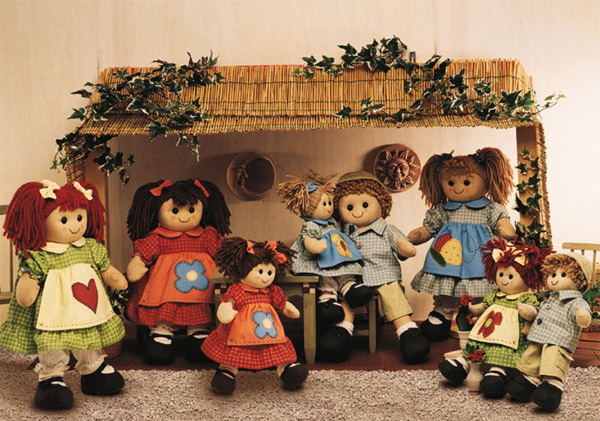
The
pants and the flower pattern on the right pant-leg of the toy bear sitting on
the chair (Picture 2) were also partially made in the labor camp. The flower on
the doll's cap was also made in the labor camp.
 |
 |
|
Picture 2 |
Picture 3 |
The sunflower on the dress
of the doll on the rear left in picture 3 was embroidered on. A line was sewn
onto the bottom of the apron and the collar. It was required that the stitches
be even and that no more than a 0.5-centimeter gap existed between stitches. The
connecting stitches and threads should be invisible.
The packaging
process was as follows: we put the pants on the doll. We positioned the pants
so the doll's legs were not exposed; we put shoes with white socks on the
doll's feet, folded the socks twice down and put the dress on the doll, affixed
the head flower on the doll and wrapped it around its head two times. We cut the
thread ends and combed the hair. We put the hat on the doll and put it in a white
cloth sack, put drying agent under the doll's buttocks, then wrapped it in
a transparent plastic bag, folded the paper box and put the fully packaged doll
in the paper box. Each person was assigned to package 120 dolls per day.
 |
|
|
Picture 4 |
The
rubber band used to fix the head flower onto the doll's head was very tight
and we had to wrap it around twice. After one day's work, our thumbs and
index fingers were red and swollen. Nevertheless, we had to continue our work
the next day, until the skin on our fingers broke open and bled.
In
picture 4, the flower patterns on the doll dresses in this picture were all embroidered
at the labor camp. One line was embroidered smoothly on the collar and the bottom
of the apron, with a space of 0.5 centimeters between stitches. The packaging
process and amount of work are the same as in picture 3.
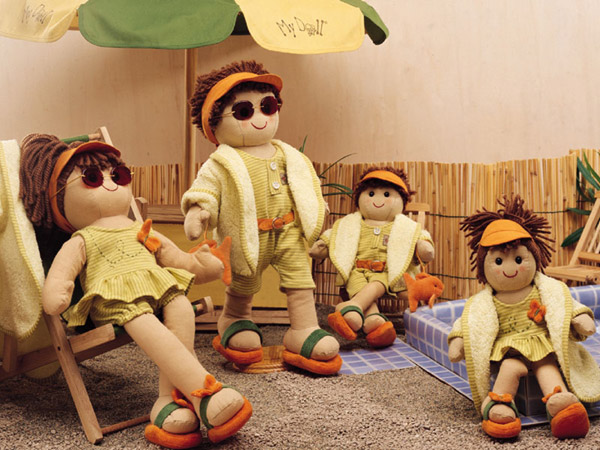
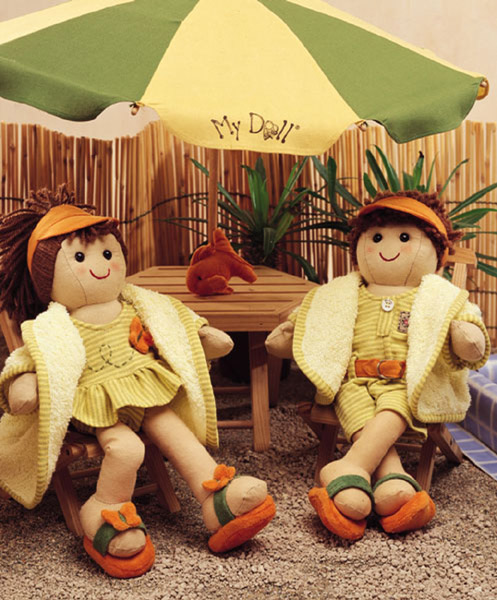
In
pictures 5 and 6, the butterflies and their wake [the trails by which the butterfly
flew] on the dolls' clothes were done at the labor camp. It was required
that the line along which the butterflies were stapled be invisible and the butterflies'
traces must be even and smooth, with no rigid corner or lines.
 |
 |
|
Picture 5 |
Picture 6 |
The photos published on this
website show only some of the products we were forced to make at the labor camp.
Falun Gong practitioners were also assigned to work on the single-packed clothing,
backpacks, and other accessories that went along with the dolls.
http://www.falunhr.org/newsletter/Issue16.html
Posting date: 27/Oct/2005
Original
article date: 22/Oct/2005
Category: Media
Report