A Falun Dafa Perspective
On the 28th of July an Australian delegation will visit China for the annual Human Rights Bilateral Dialogue. Over the past 6 years, these dialogues have educated many Chinese judicial and government officials to see other ways of respect for human life and human rights and have the good effect of preparing China for a better future. However, it is the present that is the urgent concern for human rights in China and the effectiveness of these talks should also be considered in that context.
The difficulties faced by the Chinese people, who may wish for change in local human rights was illustrated in the Time Magazine June 16 2003 article “Heal Thyself?” where doctors had been forced to follow the Party line on SARS. A doctor who participated in Beijing’s SARS cover-up said, “We want to be honest, but if we don’t go along, we can’t exist.”
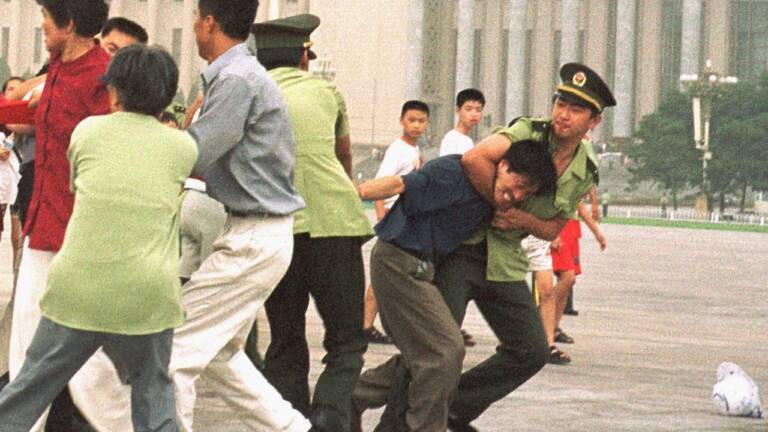
Another group who also value honesty and are struggling to exist in China are the practitioners of Falun Gong (also known as Falun Dafa). Despite being a traditional Chinese teaching of exercise and meditation following the principles of Truthfulness, Compassion, Tolerance it was declared ‘illegal’ in July 1999 by the former Chinese President, Jiang Zemin. The last year has seen 300 recorded deaths of Falun Gong practitioners due to torture in Chinese labor camps and detention centers, compared to the total over the past 4 years where 754 deaths have been verified. And these are only the figures that can be confirmed through China’s information blockade with the real death toll more likely in the thousands. This persecution has dramatically worsened despite the best intentions of these dialogues – which begs the question – is it possible to effect meaningful human rights change in such a draconian top-down system through these talks?
Just as our government may feel helpless to change the policies of the Chinese Regime, so the bilateral dialogue prepares China for a change on human rights by educating many officials who are also helpless to do anything about it. Even if our bilateral dialogues educated every middle ranking Chinese official for the next 5 years up to the Beijing Olympics, how would that affect the power and decisions of the ruling Regime and the fear they strike into the hearts of the Chinese people, both in China and in Australia?
And are we truly concerned only to improve human rights for the Chinese people or have we chosen this method because we realise we can also benefit from this approach? We can claim to promote positive change in China but at the cost of ignoring the crimes of the ruling Regime because we want their money and markets.
While Chinese officials who are concerned for human rights fear loss of their jobs, pensions, housing, lives and families – Australia fears loss of opportunity to make money for our businesses. While Falun Dafa practitioners continue to peacefully appeal in China for the freedom of belief and continue to be tortured to death and brainwashed in labor camps, Australia continues its policy of not publicly condemning such atrocities.
A key understanding of Falun Dafa is – no loss, no gain. This is a simple yet profound principle.
The Chinese regime, under former President Jiang has required tacit agreement from Australia to not publicly and openly criticize their human rights record. For this we have presumably gained improved access to Chinese markets. This “meet and trade” face saving approach is supposed to be more effective in improving human rights in China and has also been described as being in our “national interest”.
It is known that the Chinese regime fears world wide public condemnation of its policies and exposure of their human rights abuses. So they manipulate access to their economic “golden goose” that Australia and other countries clamor for, with the sole aim of staying in power and concealing the truth. And in Australia, why do we go along with it? Is it because our government follows advice that Australians want to make money out of China without caring about human rights abuses?
But what do such decisions mean for us? If Australia continues to place our trade interests above our human rights responsibilities what will happen to our collective morality?
Let’s consider a simple example:
Say we run a business and can freely choose our trading partners. There is a rich and powerful bully, who brutalizes his workers, treats them inhumanely, but can produce what we want very cheaply. There is another guy who is ethical, decent and pays his workers reasonably in good conditions but his product is more expensive, hence our profit is less. Our choice reflects our own inner qualities – and affects our morality, as in the saying, “if you lie down with dogs, you get up with fleas”. Yes we can rationalize our choice with China – we are not responsible, we can’t change anything – but deep in our hearts we know that’s not true. And what is truly in our national interest?
If the Bilateral talks were a good idea – surely it is now time to add another level of dialogue – open and honest exposition of the facts. What do we in Australia have to fear from such an approach? If we have accepted a hollow premise based on fear and greed – on behalf of all Australians – isn’t it time to re-examine it? As more and more Chinese officials truly know the value of “western” human rights values, the more and more they will wish for change, but can’t do anything about it.
So what would happen to Australia if now, we stood up as the mouse that roared and said to the Chinese regime – stop – what you are doing is wrong and we will take every opportunity to tell the world and the Chinese people – and we are not afraid of your threats? What would happen – maybe a short-term loss of business and trade – and maybe not? If this was Nigeria, Zimbabwe or Iraq we would accept that vagary – but for China, land of trade promise, the allure of the “golden goose”? But in the future, when all the good-hearted people of China understand we chose to instead forgo our selfish concerns, to consider their position, they would thank us and remember us well. No loss, no gain. For the moral and just, the gain will be noble and profound.
Posting date: 27/July/2003
Original article date: 25/July/2003
Category: Open Forum