For years, the embassies which pepper the Canberra suburb of Yarralumla have been the site of numerous protests against human rights violations. From the anti-apartheid protests held outside of the South African embassy to the bloodied crosses erected around the Indonesian embassy symbolising the East Timorese dead. These protests have varied from violent clashes to relatively sombre statements. Not one has been as peaceful as the protest by the members of Falun Gong.
For the past ten months, the grass verge on the road opposite the Chinese Embassy has been occupied by a small, yet determined, group of Falun Gong practitioners protesting the treatment of Falun Gong members in China. With banners proclaiming ‘Truth, Compassion, Forbearance’ in both Chinese and English, and quietly meditating around the clock, this small group has for the best part of a year epitomised the concept of the peaceful protest. Yet early last month the Australian government saw fit to ban the use of certain banners and meditation practices outside of the embassy on the grounds that these symbols offended the dignity of the mission.
The relationship between the Falun Gong practitioners and the Chinese government has long been a tumultuous one. The spiritual movement was banned as a ‘threat to social and political stability’ in July 1999. However, in spite of the ban, the group has grown in number so that now Falun Gong is practiced by millions of people in over 40 countries.
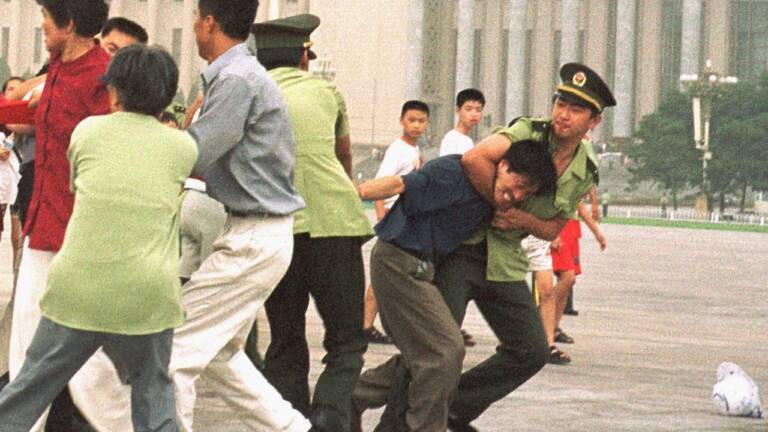
Unfortunately, as membership in China has grown, so has the number of state sanctioned imprisonments, torture, and disappearances. Over 350 Falun Gong practitioners are reported to have died in custody since the 1999 ban.
For this reason, the protests outside of the Chinese Embassy have long been a thorn in the side of the Chinese government. At the same time members of the Chinese government visited Australia to discuss trade relations, Foreign Minister Alexander Downer signed an order demanding the removal of banners and music from the protest.
While the Australian government insist that the timing of the removal is nothing more than a coincidence, Falun Gong supporters claim that the Chinese government has pressured the minister’s office to remove the banners from the protestors, most of whom are Australian citizens.
Nicholas Johnson, a member of Amnesty International, visited the protest. He says, ‘Their banners are inoffensive, the area is kept clean and unobtrusive and the protestors in no way interrupt the running of the mission, spending most of their time in quiet meditation. In fact, it is the archetype of the peaceful protest.
‘These legitimate protests, performed by Australian citizens on Australian soil, directly infringe on the rights of people to free expression, and when that free expression draws the public’s attention to further human rights violations such as the killing and torture of Falun Gong practitioners, it becomes imperative that the Australia government allow these people to have their say.’
Letters expressing concerns regarding the Australian government’s orders restricting the Falun Gong protest can be sent to:
The Hon Alexander Downer MP
Minister for Foreign Affairs
Parliament House
Canberra ACT 2600