CHINA’S COMMUNIST leadership has spent the past few days bombarding the
country’s long-suffering population, and anyone in the outside world who
will listen, with skull-numbing speeches about the supposed
philosophical
breakthrough of President Jiang Zemin. In fact his “Three Represents”
policy
is bold, but not particularly philosophical or hard to explain: It
pragmatically proposes that the Communist Party preserve its
dictatorship by
co-opting the business elite that increasingly drives the country’s
economy.
Party leaders have been duly unveiling concessions to their new
clientele at
the party congress, promising to allow entrepreneurs more access to
capital
and better terms for competing with state-owned industry. Otherwise the
congress has been striking mainly for the absence of meaningful
political
debate and the secrecy shrouding any real decision-making.
Though Mr.
Jiang
and other senior leaders are expected to step down from their party
positions tomorrow and be replaced by a new generation of leaders, there
has
been no discussion, during the many hours of televised proceedings, of
the
change or how it was decided.
Some see the leadership transition from Mr. Jiang to successor Hu Jintao
as
a modest step forward, because it is the first in Communist Chinese rule
not
precipitated by a leader’s death or accompanied by violent upheaval. Mr.
Jiang is credited with having established a powerful consensus during
his 13
years in office behind policies of rapid economic modernization, the
embrace
of global capitalism and the maintaining of stable relations with the
United
States. Little is known about Mr. Hu and the other new leaders, but they
are
widely expected to continue this course. Yet Mr. Jiang, who will retain
considerable influence through allies he has installed in the party
Politburo, has also frozen what had been a slow crawl toward greater
democracy by the Chinese leadership before 1989. His alternative is the
cozy
alliance between bureaucratic and economic elites, shielded by an
authoritarian umbrella, that for decades has served such regimes as
Malaysia
and Singapore — not to mention Taiwan before its recent
democratization.
So far this seems to be working reasonably well: Chinese growth remains
high, foreign investment is pouring in, and dissident movements such as
the
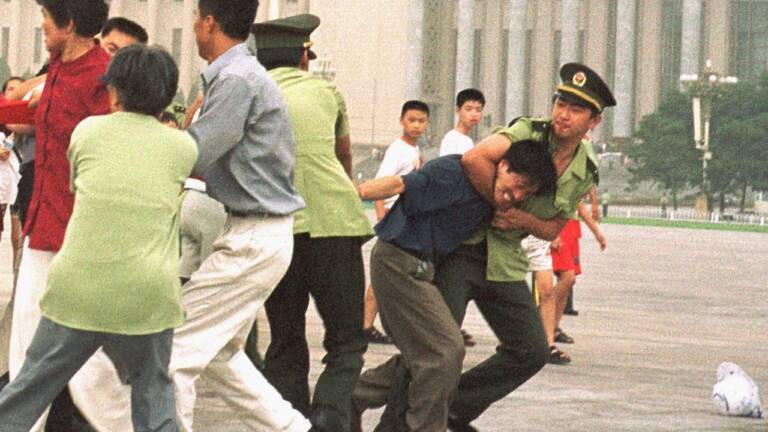
Falun Gong religious order have been crushed with relative ease. Yet the
leadership still feels insecure enough to round up dissidents of all
kinds
and ship them out of Beijing before staging its congress. Signs of
potentially serious economic problems lie just below the surface:
Without a
working rule of law, corruption threatens to become overwhelming. So do
the
bad loans by the state-run banking industry, which could bring on a
financial crash if growth should falter. These threats could be greatly
reduced if Mr. Hu were to pursue even modest political liberalization,
such
as greater press freedom, the expansion of multi-candidate elections
from
villages to larger jurisdictions, and tolerance for independent civil
and
religious movements. Such reforms seem to be regarded as too risky by
most
Chinese leaders; yet history — including that of Taiwan — suggests
that
Mr. Jiang’s authoritarian strategy is even less likely to succeed.
http://www.washingtonpost.com/wp-dyn/articles/A51765-2002Nov13.html
Posting date: 15/Nov/2002
Original article date: 14/Nov/2002
Category: Media Reports & Forum