News&Feature
The pretence that socialism lies at the heart of modern China has finally
been swept away with the official welcome of those once-reviled enemies of
the proletariat, private entrepreneurs, into the Chinese Communist Party
(CCP). The President, Jiang Zemin, may claim his nation is in the throes of
a “great pioneering enterprise” as it develops a market economy under a
socialist system of government. But in truth, communism has been jettisoned
in all but name.
This has been more than apparent at the 16th CCP Congress in Beijing, which
runs until Friday. Mr Jiang embraced entrepreneurship and told his comrades
to respect private property rights, regardless of how much China’s new
“haves” may have amassed. While Mr Jiang is expected to step down and hand
power to a younger generation this week, little change is likely in the
manner in which China is ruled, that is, as an authoritarian state under the
party’s banner. The congress has heard no mention of democratisation, nor of
the fundamental flaws in the marriage of market capitalism and single-party
rule.
The late Deng Xiaoping took the first steps away from China’s centralised
state economy and the painful social controls of Mao Zedong. But hopes for
political freedoms to match were crushed in 1989 with the Tiananmen Square
massacre. China’s roaring industrial economy, its burgeoning consumer class,
and greater individual freedoms of movement, for example, now present an
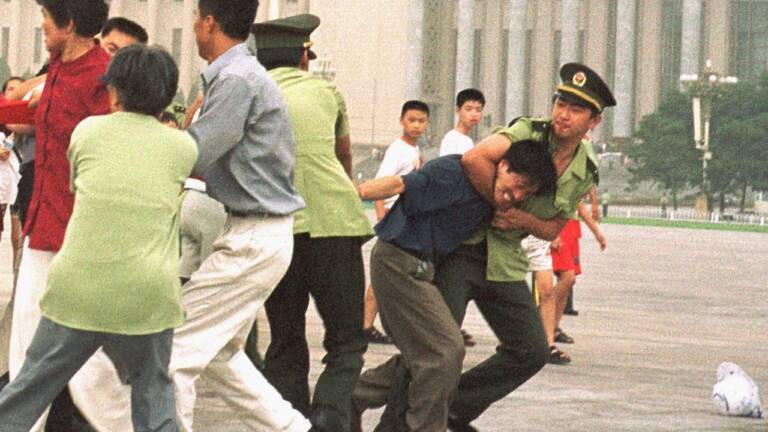
undeniable veneer of openness. However, dissent continues to be swiftly
crushed as the recent brutal crackdowns on the Falun Gong attest.
The next generation of leaders will inherit serious underlying tensions. The
most serious, perhaps, is official corruption. A single-party state is
answerable to no one and offers officials opportunities to use influence for
personal profit. It is also clear that economic growth is uneven, and is
likely to leave the rural proletariat for whom the revolution once held most
promise the furthest behind.
While economic growth remains strong it may be possible to paper over the
cracks. A market economy, however, requires freedom of thought, innovation
and individual initiative to flourish and continue to grow beyond low-wage
manufacturing industries. Such qualities are the antithesis of authoritarian
rule. Fallen dictators in South Korea, Taiwan, Indonesia and the Philippines
have learnt this lesson. The key question for China is when and how, not if,
these tensions will be played out.
Posting date: 14/Nov/2002
Original article date: 12/Nov/2002
Category: Media Reports & Forum